The Origin of Forms
2023
Solo exhibition.
Museo Centro de Arte Dos de Mayo, Móstoles.
Curated by Tania Pardo
Graphic design by Álex Gifreu
Leer en español →
The Origin of Forms (2023–24) explores the conditions that shape artistic vocations and determine the long-term sustainability of an artistic practice. Developed for the Museo Centro de Arte Dos de Mayo (CA2M), the exhibition expands on The Best Job in the World (2021), a project initiated through interviews with Spanish artists who had abandoned their artistic careers for a variety of reasons.
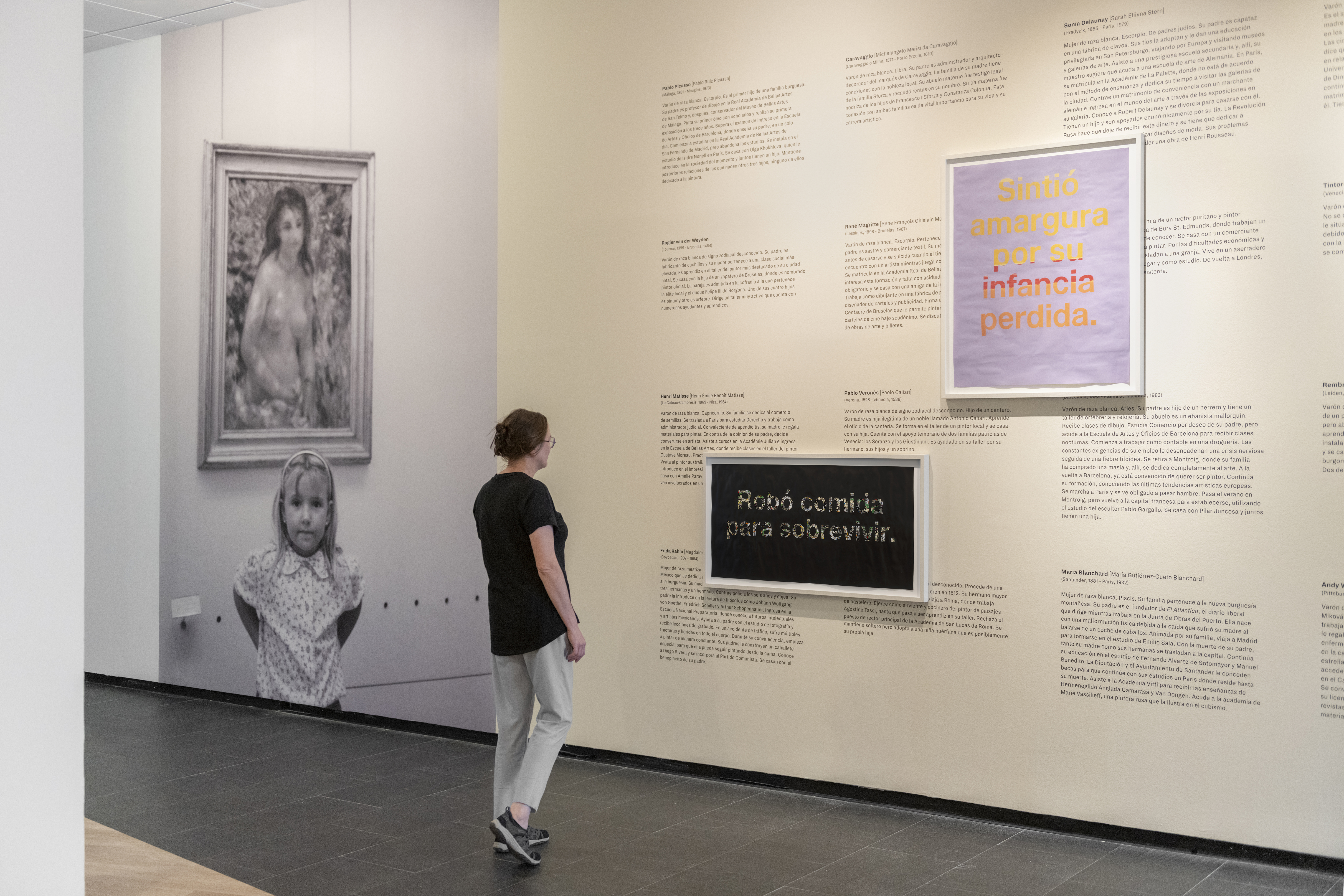
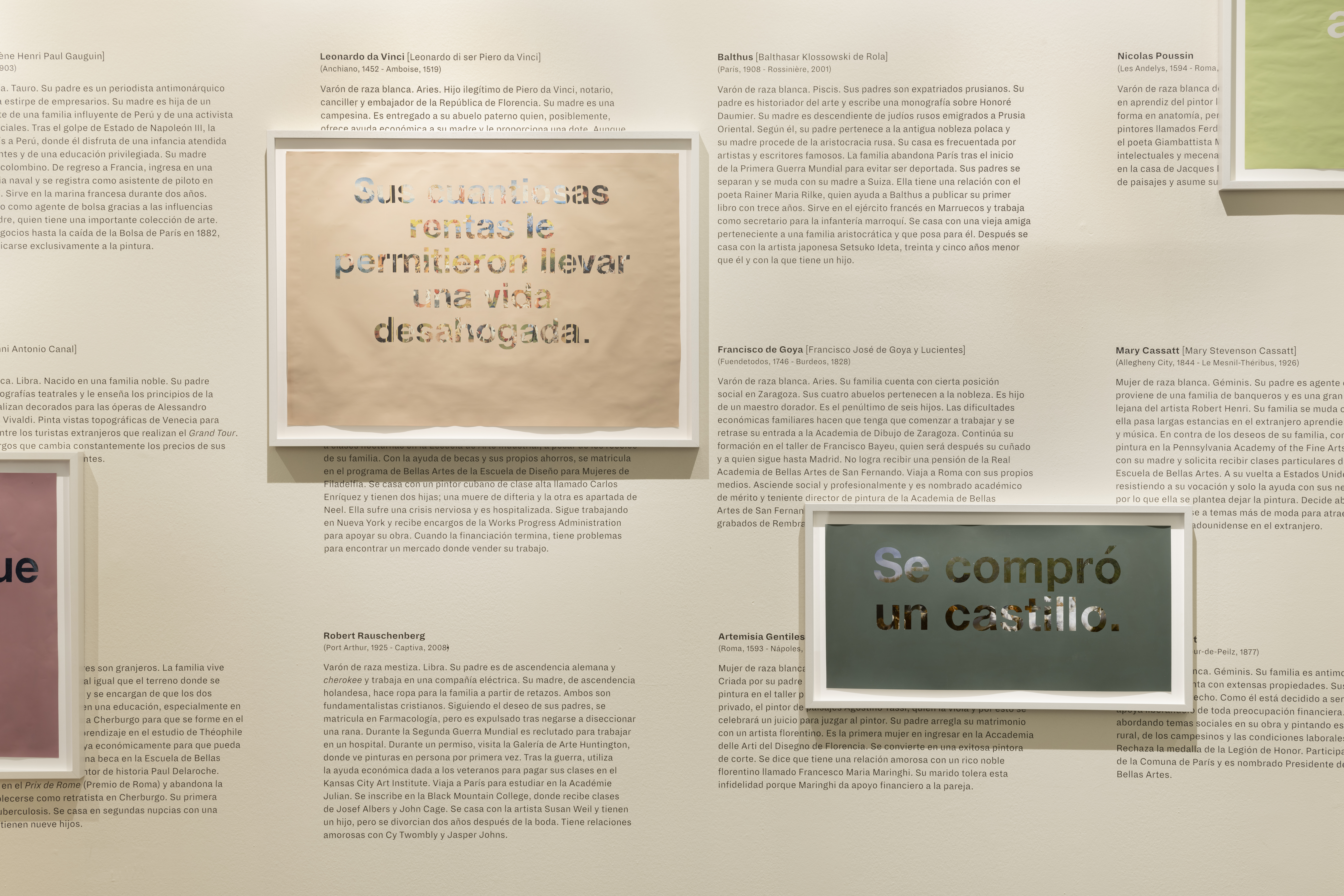
Conceived as a large-scale installation, the exhibition brings together archival materials, paintings, and spatial interventions that examine how family background, education, social class, economic support, and mechanisms of professional legitimisation influence artistic trajectories. At its core, Masters of Western Painting presents a text-based wallpaper compiling biographical information on one hundred painters—from Giotto to Paula Rego—overlaid with a series of museum posters acquired from different institutions and altered with paint. On each poster, a sentence drawn from the biography of the artist whose work is depicted has been painted in negative, inviting viewers to read canonical works of Western art history—The Raft of the Medusa, The Garden of Earthly Delights, or The Night Watch, among others—through the social, economic, and cultural conditions that shaped the lives and careers of their creators.
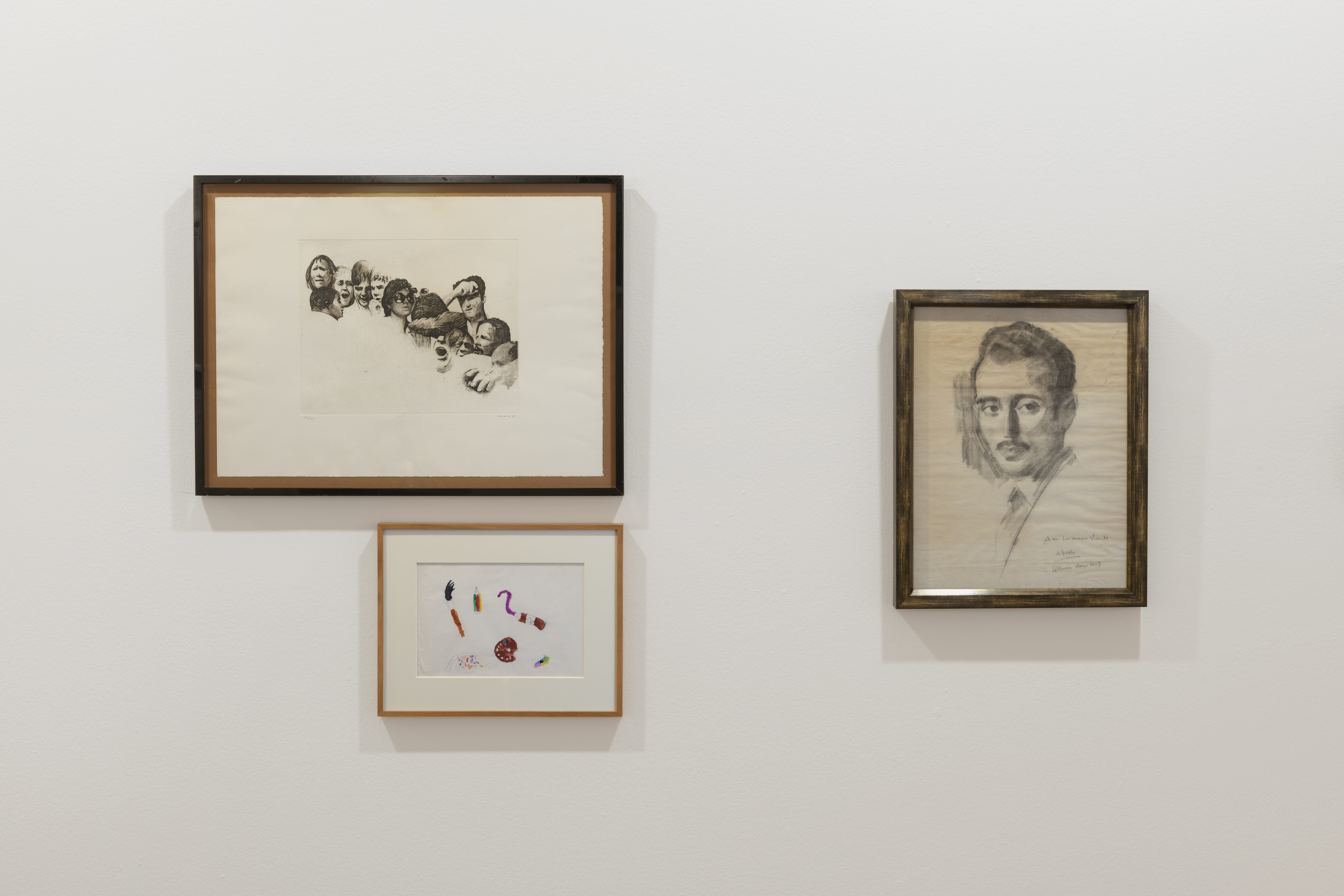
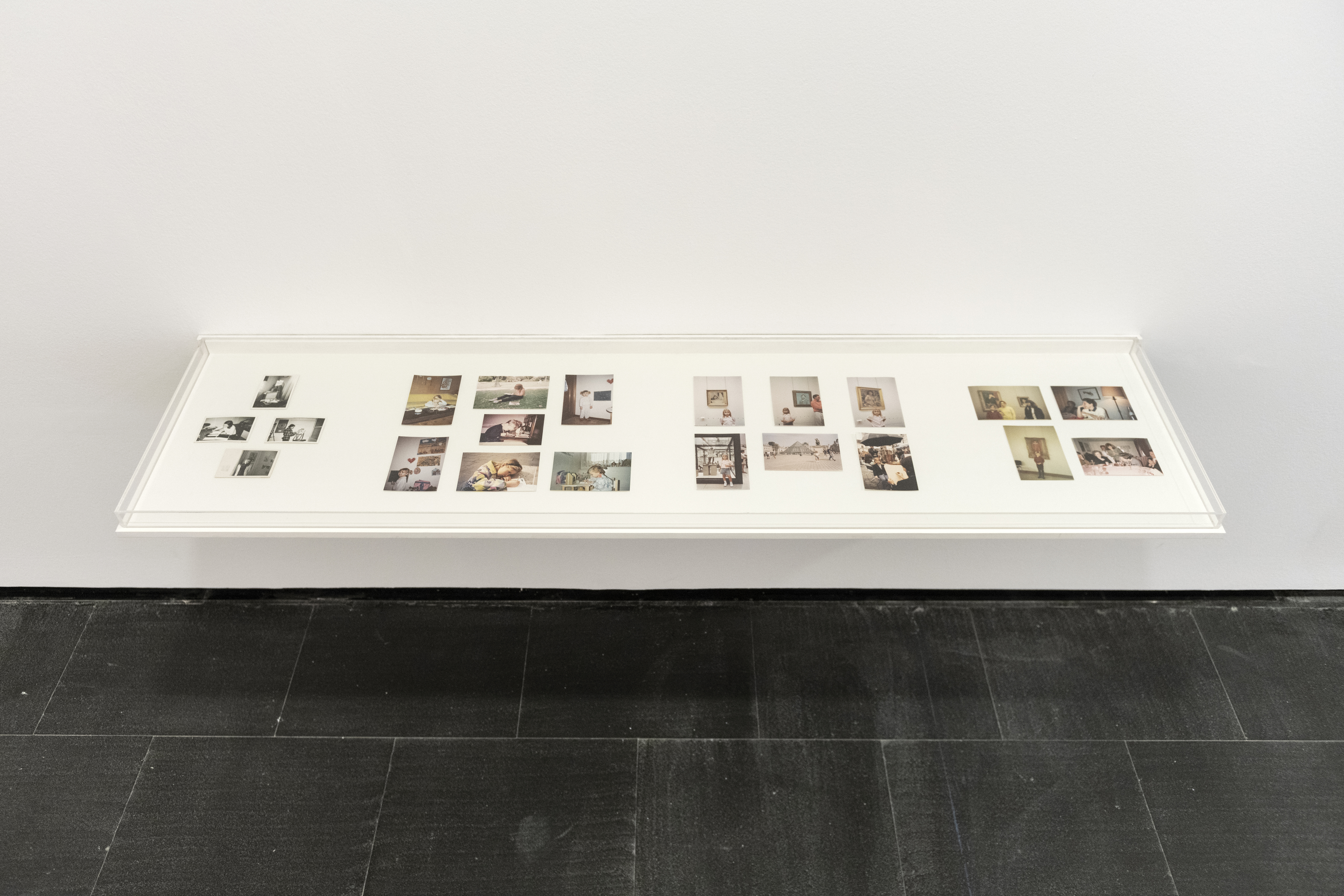
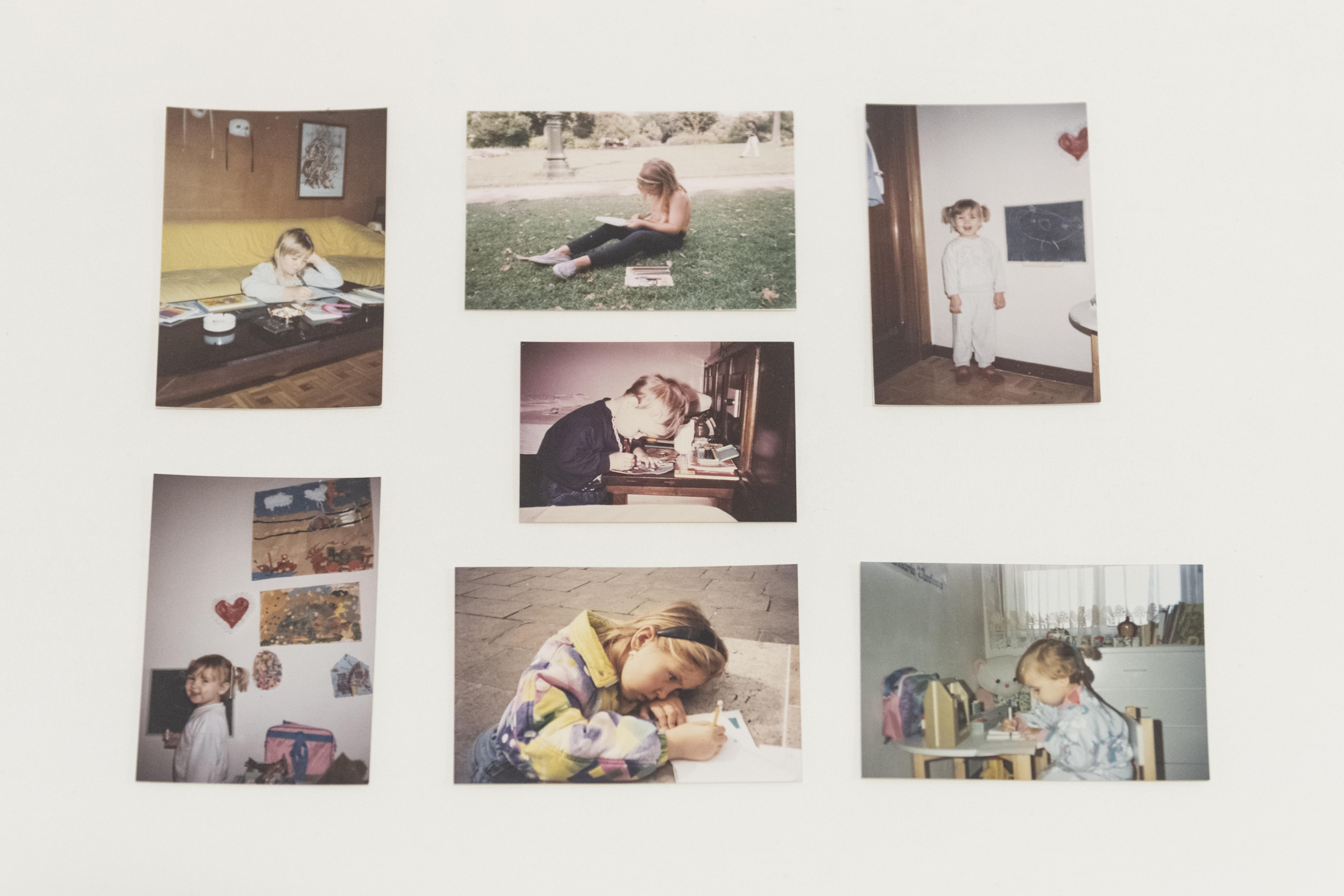
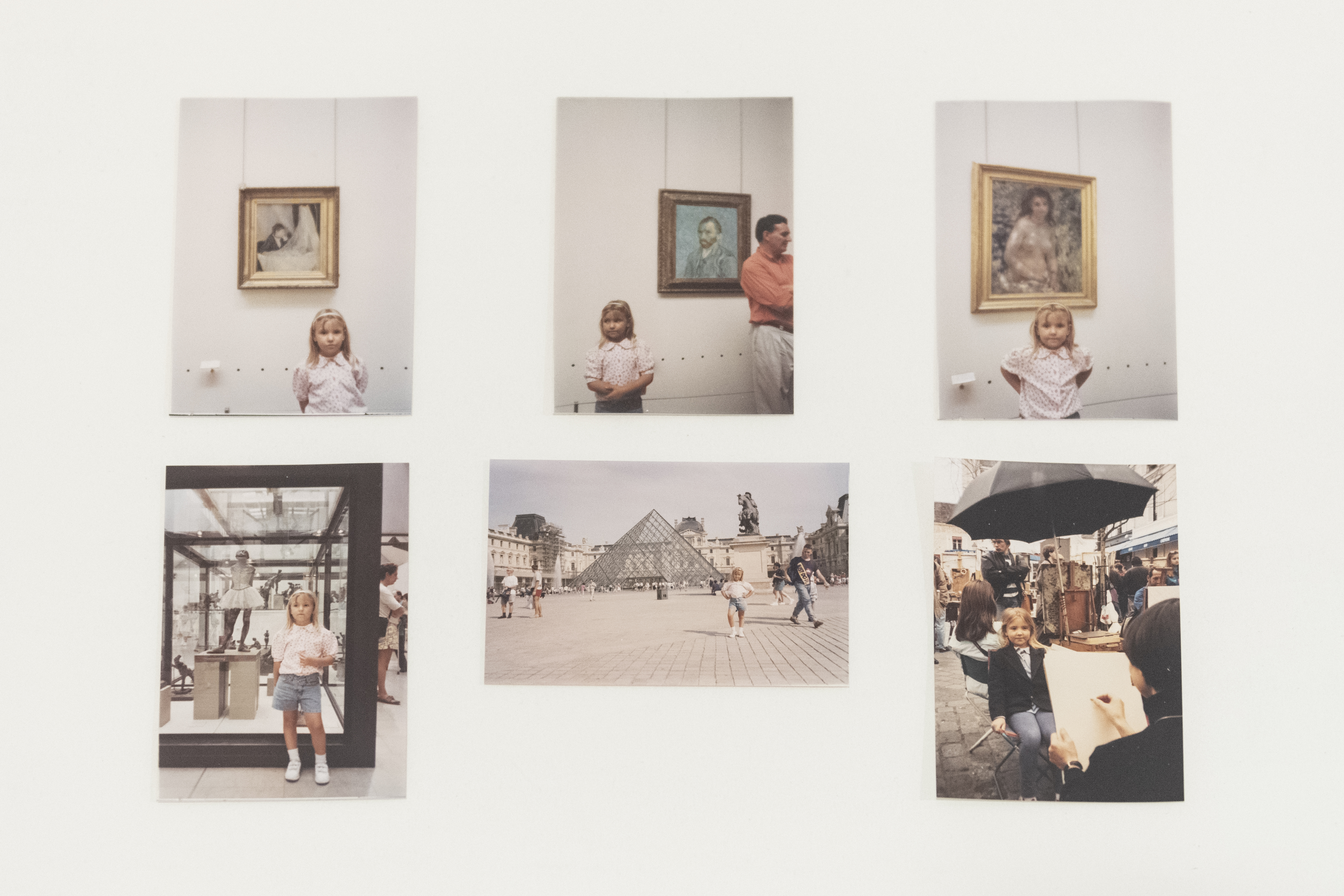
Alongside this work, I reconstruct the possible origins of my own artistic vocation through childhood drawings, amateur copies of Renoir painted by my parents, photographs, documents, and a life-size architectural plan of the first studio I inherited when I began studying Fine Arts. By placing personal history in dialogue with narratives of art history, The Origin of Forms reflects on the invisible structures that precede and sustain artistic practice, as well as on the historical and media apparatuses that have contributed to constructing the identity of the artist in the West.
Conceived as a large-scale installation, the exhibition brings together archival materials, paintings, and spatial interventions that examine how family background, education, social class, economic support, and mechanisms of professional legitimisation influence artistic trajectories. At its core, Masters of Western Painting presents a text-based wallpaper compiling biographical information on one hundred painters—from Giotto to Paula Rego—overlaid with a series of museum posters acquired from different institutions and altered with paint. On each poster, a sentence drawn from the biography of the artist whose work is depicted has been painted in negative, inviting viewers to read canonical works of Western art history—The Raft of the Medusa, The Garden of Earthly Delights, or The Night Watch, among others—through the social, economic, and cultural conditions that shaped the lives and careers of their creators.
Alongside this work, I reconstruct the possible origins of my own artistic vocation through childhood drawings, amateur copies of Renoir painted by my parents, photographs, documents, and a life-size architectural plan of the first studio I inherited when I began studying Fine Arts. By placing personal history in dialogue with narratives of art history, The Origin of Forms reflects on the invisible structures that precede and sustain artistic practice, as well as on the historical and media apparatuses that have contributed to constructing the identity of the artist in the West.







Credits:
General installation views and details of the exhibition The Origin of Forms [El origen de las formas], Museo Centro de Arte Dos de Mayo (Móstoles, 2023).
Images: Roberto Ruiz.
General installation views and details of the exhibition The Origin of Forms [El origen de las formas], Museo Centro de Arte Dos de Mayo (Móstoles, 2023).
Images: Roberto Ruiz.